|


Inositol is a natural compound similar to vitamins and belonging to the sugar alcohols, which is found in the human brain, kidneys, and ovaries. It was previously classified as a B vitamin (vitamin B8), but it has been proven that our bodies are also capable of synthesizing it in small amounts. It is found in its natural form in certain fruits, whole grains, legumes, seeds, nuts, and citrus fruits.
|
|
Myo- and D-chiro-inositol
|
|
Inositol is known to have several variants with the same molecular formula but different spatial structures, known as isomers. Among these, the forms with the most significant physiological relevance and the most frequent occurrence are myo-inositol (MI) and D-chiro-inositol (DCI). They have become the focus of scientific interest in connection with the study of metabolic, hormonal and nervous system processes in the human body, particularly due to their role in intracellular signalling pathways. The ratio of inositol isomers varies in different tissues of the body. For example, in plasma and in healthy ovarian tissue, the ideal MI:DCI ratio is 40:1. Therefore, this is the ratio we have also applied in the composition developed by us.

Vitamin C is probably the best known vitamin and belongs to the group of water-soluble vitamins. While most animals can synthesize their own vitamin needs, humans must resort to dietary sources. Nutrients of animal sources contain very little Vitamin C, while green plants and fruit provide most of our vitamin C supply. Some plants contain particularly large quantities, for example 1-2% of the dry weght of rosehip is vitamin C. In its pure form, Vitamin C was first isolated by Albert Szent-Györgyi who found it in adrenal glands in 1928. In 1931, he identified them in lemon juice and bonnet pepper. Szent-Györgyi was awarded Nobel Prize in Medicine for this discovery in 1937.
Main natural sources
Citrus fruit, berries, green and leafy vegetables, tomato and pepper.
|
|
Why is Vitamin C important?
|
|
Vitamin C contributes to our energy-producing metabolic processes, to the maintenance of normal psychological function, to the operation of the nervous and the immune systems. It also helps the formation of collagen and because of this, it maintains healthy skin, blood vessels, cartilage, bones, teeth and gums. It helps reduce fatigue, contributes to regenerating the reduced form of vitamin E and increases the absorption of iron. It contributes to the protection of cells against oxidative stress, and to the normal function of our immune system during or after intense exercise.
|
|
Folic acid (in the form of methylfolate)
|
|
Vitamin B9 is commonly referred to as folic acid, although the organic, natural form of vitamin B9 is folate, whose biologically active form is methylfolate. The name derives from the Latin word folium, meaning ˝leaf˝, referring to the fact that leafy vegetables are natural sources of folate.
Main natural sources
Leafy vegetables such as spinach, lettuce varieties, Brussels sprouts and broccoli, as well as legumes, liver, yeast, peanuts and nuts.
Folate plays a role in cell division and normal blood formation, participates in normal amino acid synthesis, contributes to the normal functioning of the immune system and to the maintenance of normal psychological functions, and helps reduce tiredness and fatigue.


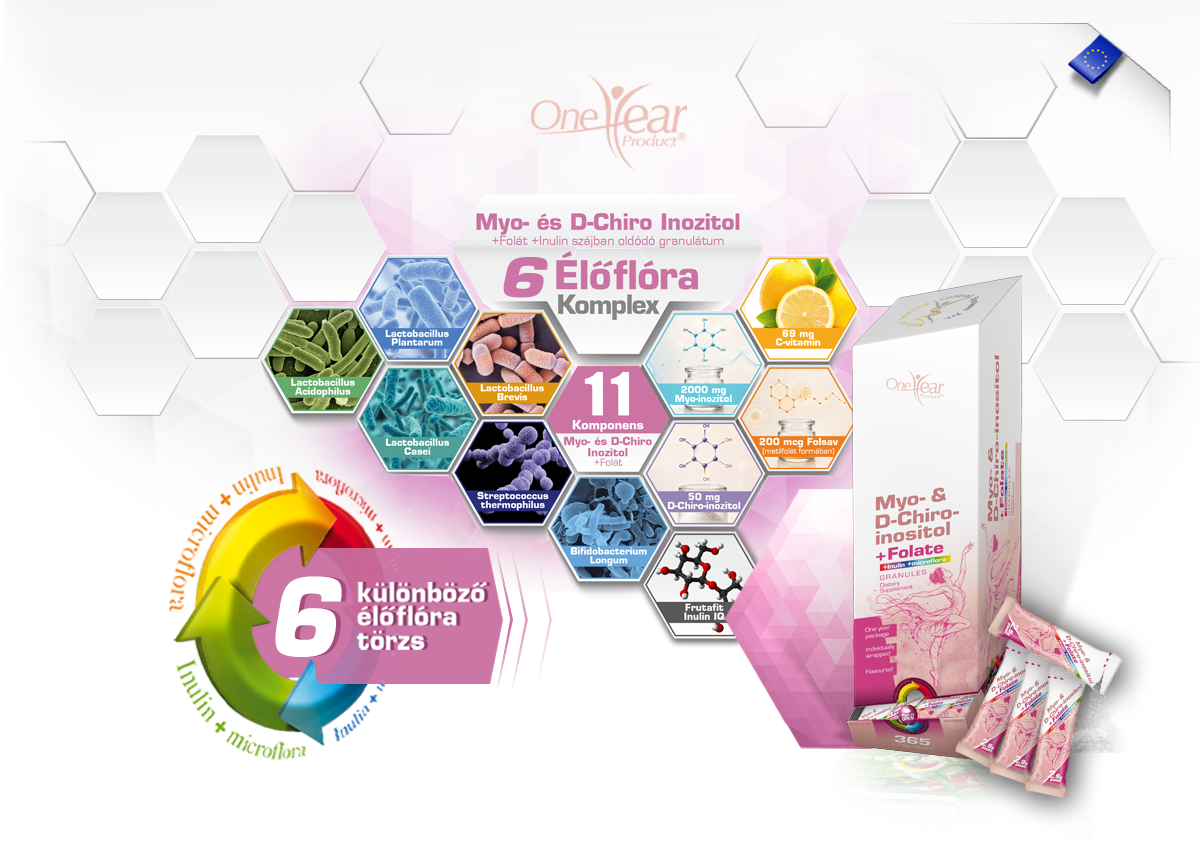
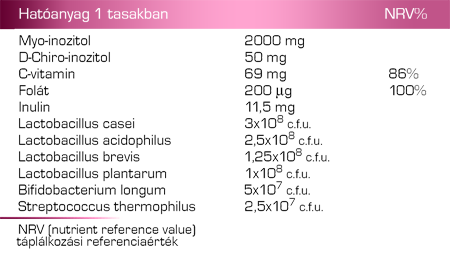
This One Year Product contains six different types of microflora in an increased number of germs, as well as Inulin improving efficiency.
Inulin and Microflora
Microflora is formed by beneficial, living microorganisms, which survive the acidic environment in the gastrointestinal tract and help maintain the balance of healthy intestinal mircroflora. Our products contain high numbers of bacterial florea and inulin which helps their reproduction. Probiotics word also known as microflora is of Greek origin meaning life. R. B. Parker was the first who used the term probotic in 1974 for organisms and substances responsible for the balance of intestinal tract. The characteristiscs of probiotics are: human origin, non-pathogenic, resistant to the digestive effects of gastric acid, bile, saliva, pancreatic and intestinal fluids. They retain their resilience in food shelf life and technological processes. In addition, probiotics are capable of adhering to mucosal cells, have antimicrobial activity against potential pathogens, and reduce the adherence of pathogenic microbes to the mucosal surface. Probiotics are mostly lactic acid bacteria and bifidobacteria. Most of the best-known probiotic lactic acid bacteria strains are Lactobacillus, smaller portion is Streptococcus genus. Prebiotics are natural nutrients, that are the sole nutrients of probiotics therefore promote their reproduction and prevalance. In the oral cavity and the gastrointestinal tract, the digestive enzymes do not break down the prebiotics and thus can reach the large intestine undigested. Prebiotics are dietary fibers, but water-soluble, therefore one of the best dietary fibers. In addition to their function of dietary fiber, their real utility lies in the fact that they are the exclusive nutrients of probiotics. Because of the lack of digestible nutrition in the large intestine where there is little food, the consumed prebiotics offer the possibility of the reproduction of human-friendly intestinal bacteria. Many foods contain prebiotics, for example: Jerusalem artichoke, chicory, onions, garlic, leeks, artichokes, whole grains, wheat, banana, flax, spinach, cabbage, chard, mustard, berries, legumes, milk and most mature cheese. Inulins are a type of prebiotics and actually dietary fibers that reach the large intestine undigested, enhance the reproduction and prevalance of probiotics. Their role: digestion, balance of the intestinal flora
Our bodies are connected with the outside world through our intestinal system that is about 7-9 meters in length (the largest area in our body). Therefore it is vulnerable by the potential attack of pathogens and toxic substances. Normally there are about 200 to 400 different types of bacterial strains in our bowels. In fetal life beneficial bacteria dominates in 95-98%. Healthy intestinal flora provides protection against a variety of pathogens, ensures the integrity of intestinal mucosa and helps the absorption of the needed nutrients. They produce many essential vitamins for our body. If the gastrointestinal tract's defense mechanisms weaken, it can cause intereference in the absorption processes. In order for probiotics to be effective in their environment, a large number is required which is at least 108 c.f.u./gram in the body. | What does the c.f.u. expression mean? c.f.u.: colony-forming units per milliliter, the number of viable microorganisms. The amount of bacteria is usually measured this way in products. However, inulin is given in milligram. As appropriate doses of at least 109 c.f.u. is accepted. | |
| What kind of probiotic products are effective? - | Prebiotics help the reproduction of probiotics, therefore products should contain inulin or fructo- oligosaccharides. | | - | They resist the effects of stomach acid, bile and digestive enzymes, so the live beneficial bacteria can reach the large intestine, where they are able to adhere and reproduce. One essential condition is that the bacteria keep their viability during their passage through the gastrointestinal tract. | | - | A good probiotic product should contain at least 5-6 strains, as we intend to make up the intestinal flora's multi-culture. | | - | During the warranty period and during technological processes they keep power of resistance. | | - | It contains of an appropriate volume of germs, the minimum quantity proposed by
specialist is 108 or 109 c.f.u. |
| |
|